Fixed at the bench, by hand
No machine and no glue-down shortcut — the same kind of hand work that built the rug in the first place, done at our plant.
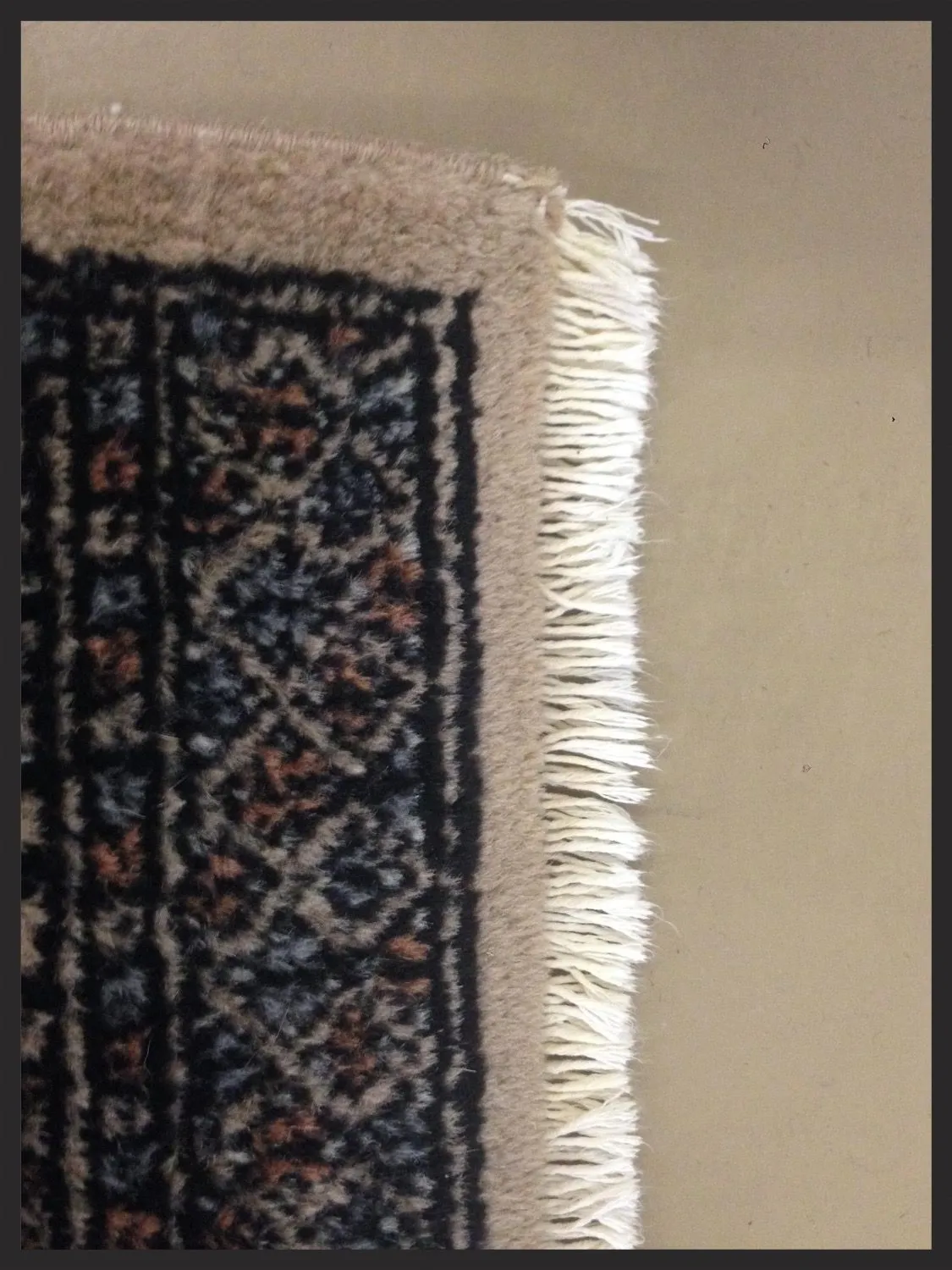
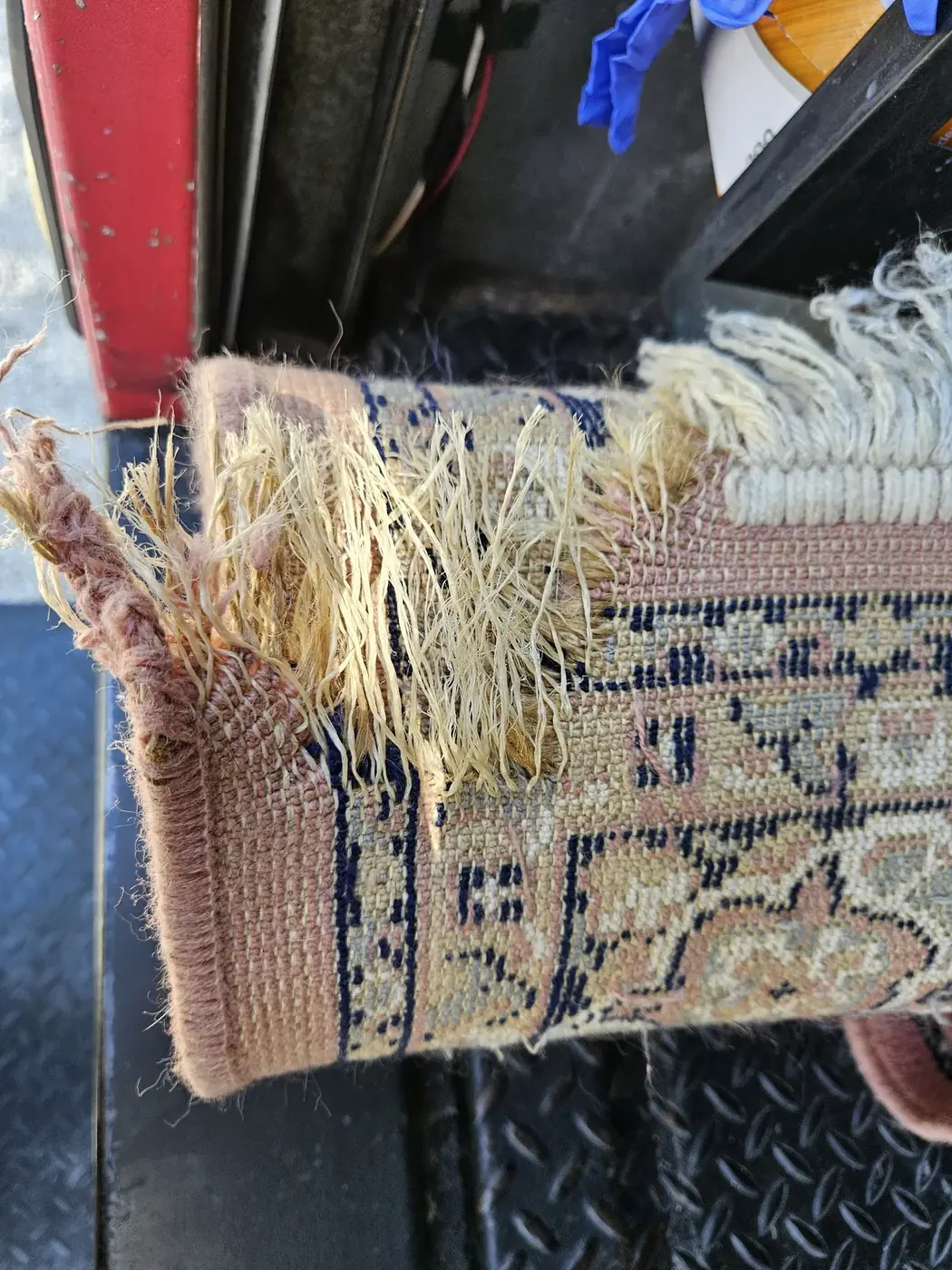
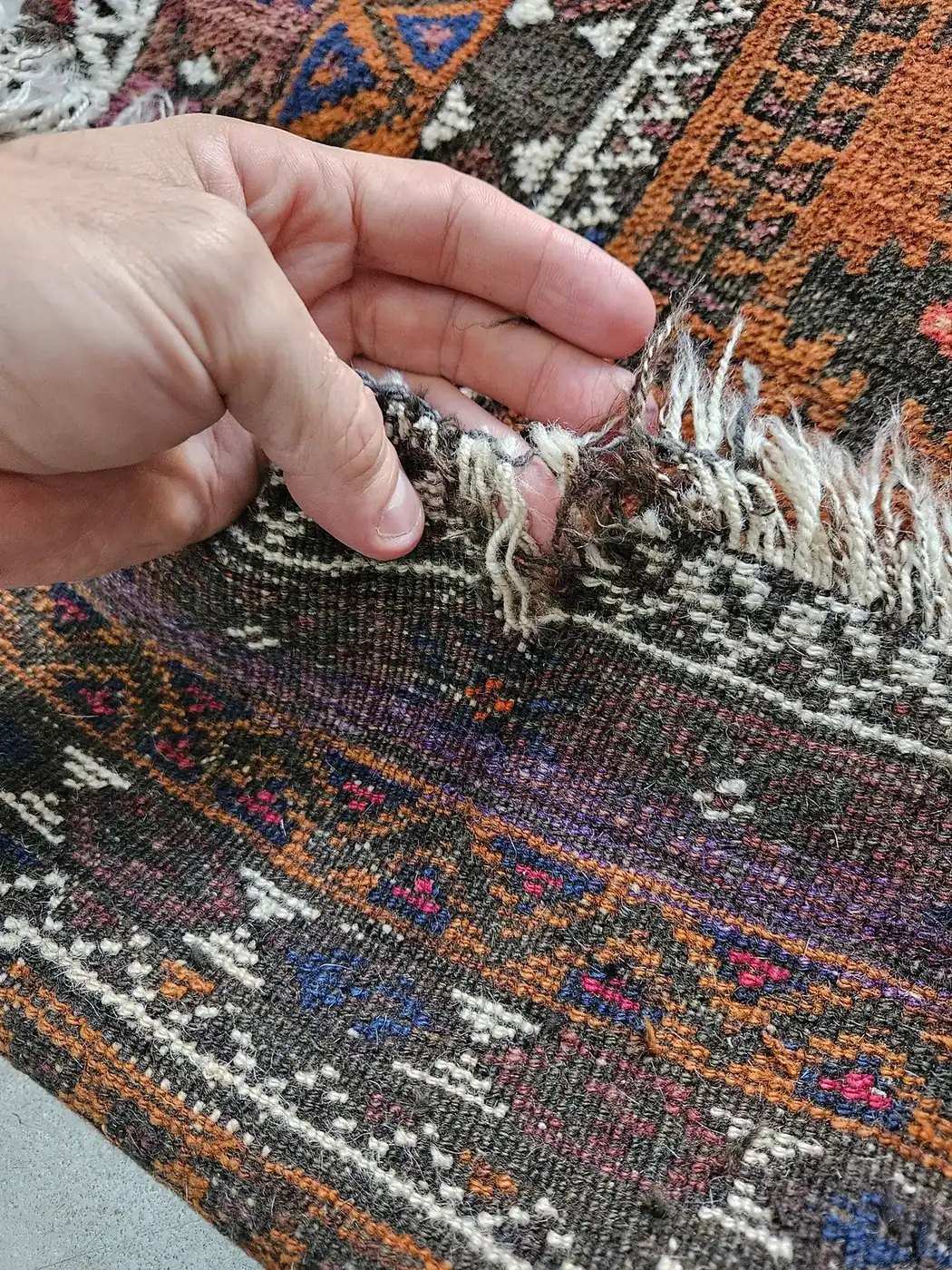
Worn fringe, a chewed corner, a moth-eaten patch or an edge unraveling — most of it is fixable by hand, and all of it is done at our own Wellington plant. Send a photo when you ask, and we’ll tell you honestly what’s worth doing.
Small now, costly later
Because a rug unravels in a chain reaction. A few loose fringe knots let the end of the pile start walking off the foundation. An open edge lets a whole side lose its guard threads. A tiny moth patch becomes a bald run.
Caught early, most of these are a quick hand repair. Left through a couple of humid Wellington summers — with foot traffic, pets and damp doing their work — the same rug can need full reweaving across a whole border. The cheapest repair is almost always the one you book first.
No machine and no glue-down shortcut — the same kind of hand work that built the rug in the first place, done at our plant.
What we fix
Fringe is the foundation showing at the ends, so a frayed fringe is an early warning. We secure the loose ends or rebuild the fringe so the body of the rug stays intact.
The wrapped sides of a rug take the worst of the wear. We re-wrap and overcast the edges by hand, re-anchoring the outer rows before a whole side starts to open.
Holes from wear, burns or pets are rewoven to match the surrounding pattern, knot by knot, so the patch settles into the design instead of shouting from it.
Moths eat wool from the back where you rarely look. We clear the infestation, then reweave the grazed and bald areas to bring the pile back where it was lost.
Damp and old spills rot a cotton foundation from within — a real risk with Wellington humidity and rugs stored rolled in a garage. We cut out the failed area and rebuild the base.
A rug can be shortened or narrowed to fit a room, and a tired antique can be brought back over time with patient full restoration — always after we tell you if it’s worth it.
Between visits
A few habits stretch the years between repairs. Rotate the rug a couple of times a year so the sun through those big Florida windows fades it evenly, and so one traffic lane doesn’t take all the wear.
Use a proper pad, vacuum gently without beating the fringe, and blot spills fast rather than scrubbing. Keep stored rugs off a damp garage floor and wrapped against moths. And have the rug washed on a sensible cycle — clean wool simply lasts longer than gritty wool.
Straight talk
Yes — every time. Some rugs are worth full restoration and some simply aren’t, and we’d rather lose the job than talk you into spending more on a repair than the rug is worth.
After we inspect it you get a plain recommendation: fix it, live with it as-is, or let it go. No pressure, no upsell, no work started before you’ve said yes to a price in writing. That’s the same way we’ve run this since 2006.
Free pre-inspection, zero pressure
Tell us what’s wrong and we’ll arrange a free pickup, inspect the rug, and give you an honest recommendation and the exact price before any repair begins.