No shortcuts, no wand on the driveway. A rug that comes to us is measured, tested, dusted, submerged, washed and speed-dried in a controlled room — then groomed and driven back to your door in Wellington.
Step zero
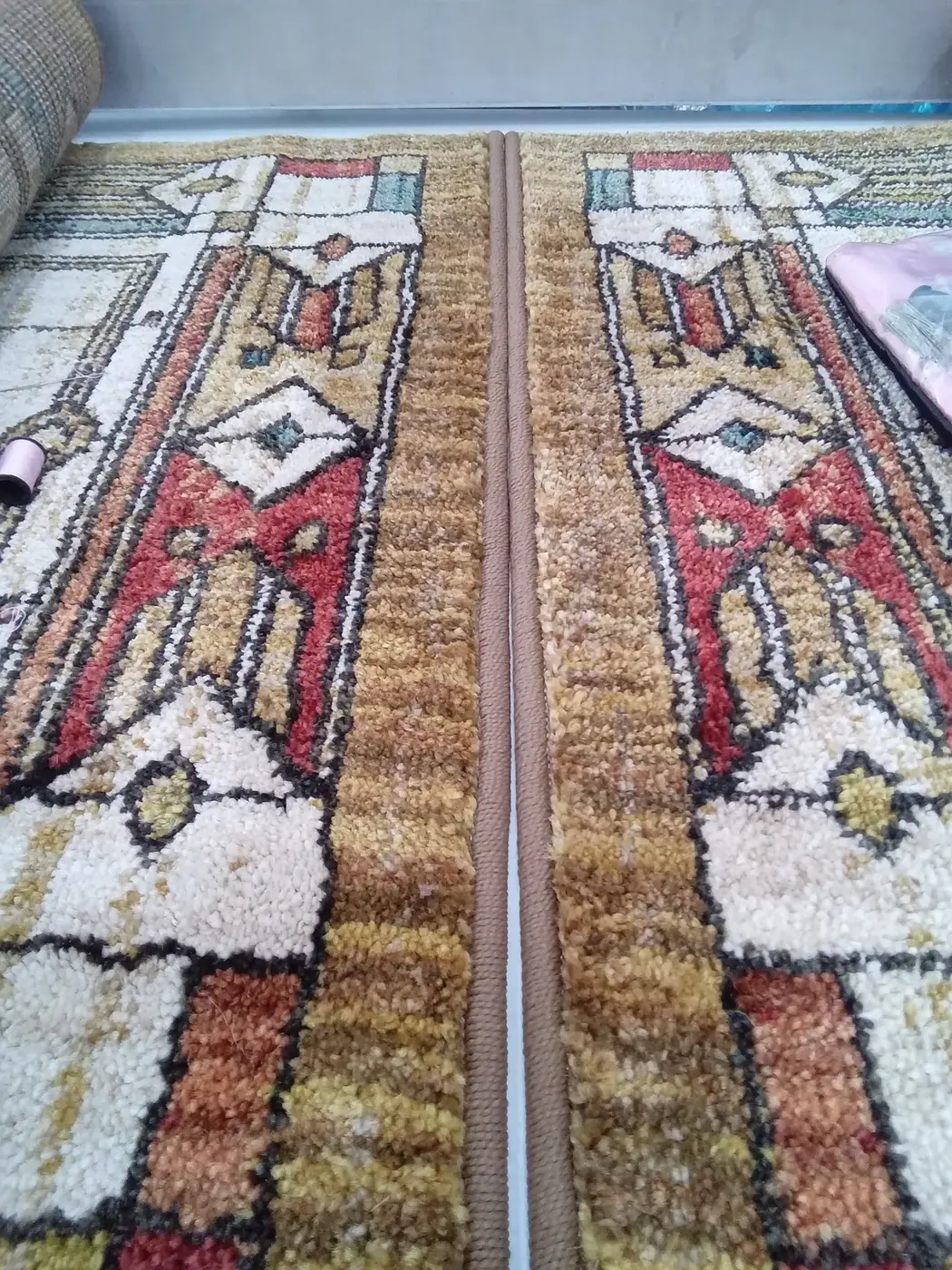
Because you should know the price and the plan before a drop of water is involved. When we collect your rug, we lay it out, measure it, and read it: fiber, construction, age, wear, spots and any loose fringe or edges.
Then we run a pH test and a dye-stability check. Only after that do we quote you — in writing, once, before any cleaning begins. No phone guesses, no surprises when the rug comes home.
Reading the rug
We look for the things that decide how a rug is handled. Is the foundation cotton or wool? Are the dyes vegetable or synthetic, and will any of them move when wet? Is there pet contamination hiding in the pile, or dry rot weakening the back?
Wellington rugs bring their own tells — sun-faded edges from big east-facing windows, grit worked deep by open lanai doors, and the damp musty note that our humidity leaves in a rug that has been rolled up in a garage.
Dry soil first
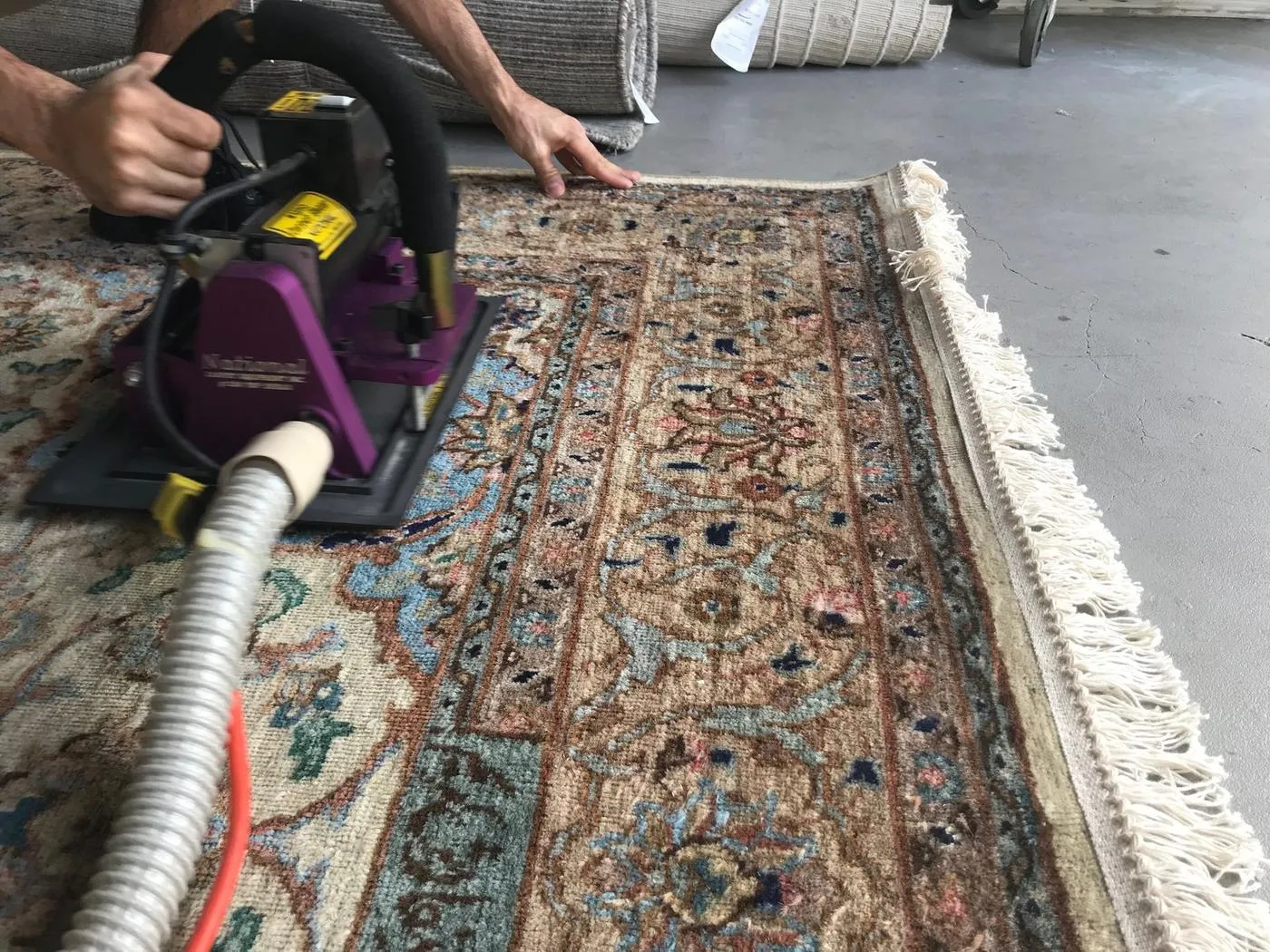
Because a rug can hold pounds of dry grit down in its foundation, and water turns that grit into mud you can never fully rinse out. So it comes out first, dry.
We beat and vacuum the rug from both sides until the fine sand and dust stop falling. In a place like Wellington — wind off the Everglades, sandy soil, horses and dogs tracking through — that dry-soil load is heavier than most owners ever imagine.
The wash
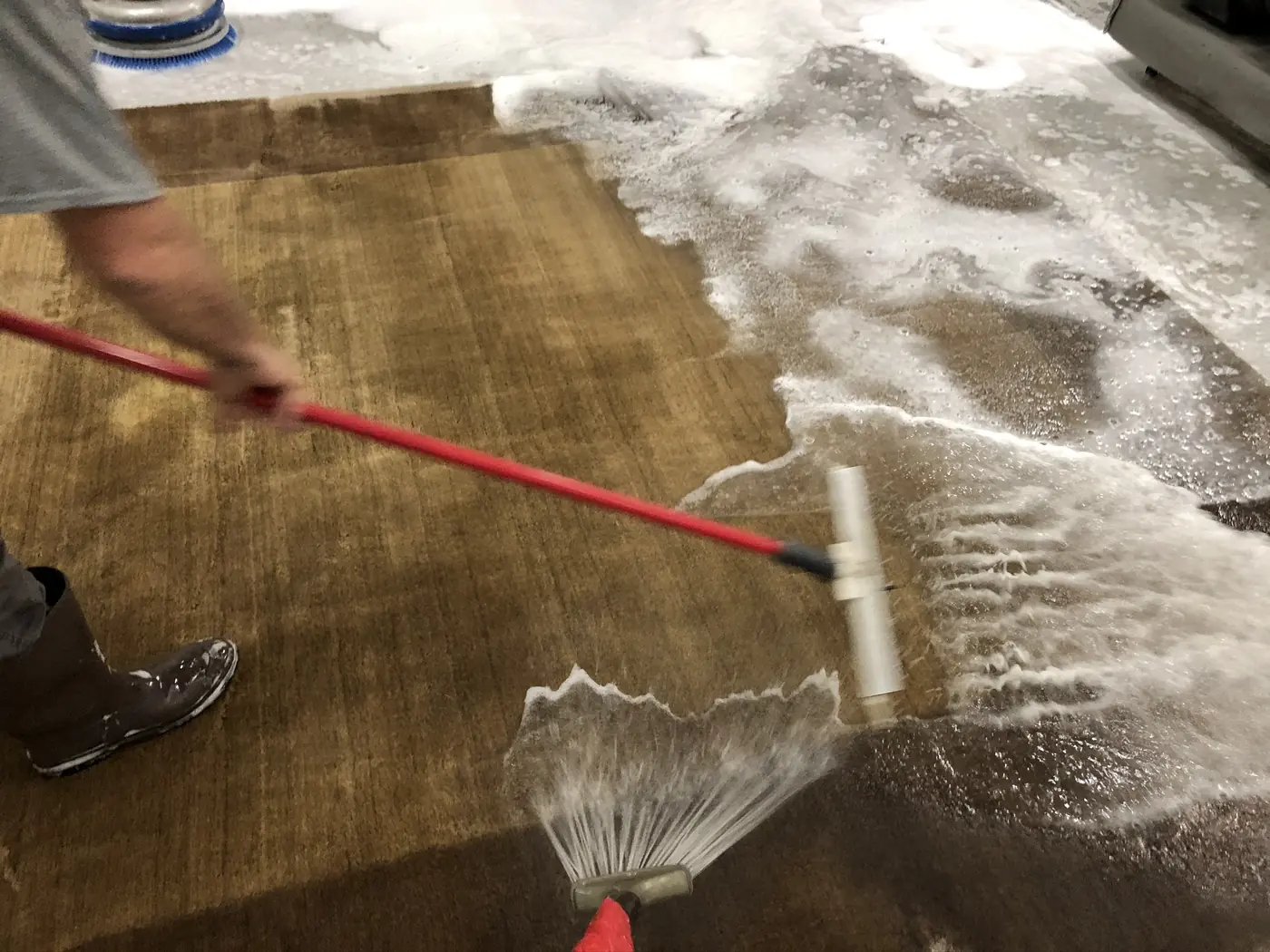
Once the rug is dusted, it gets a full wet wash. We flood it, then work a natural pH shampoo through the pile with soft brushes, matched to the fiber in front of us — gentle for wool and silk, more thorough for a synthetic that can take it.
Then we rinse, and rinse again, until the water leaving the rug runs clear. That flush is the whole difference between a rug that is clean and one that only looks clean on top.
The steps a wand on your patio can never do: a flooded pit wash and a controlled, managed dry.
Humidity is the enemy
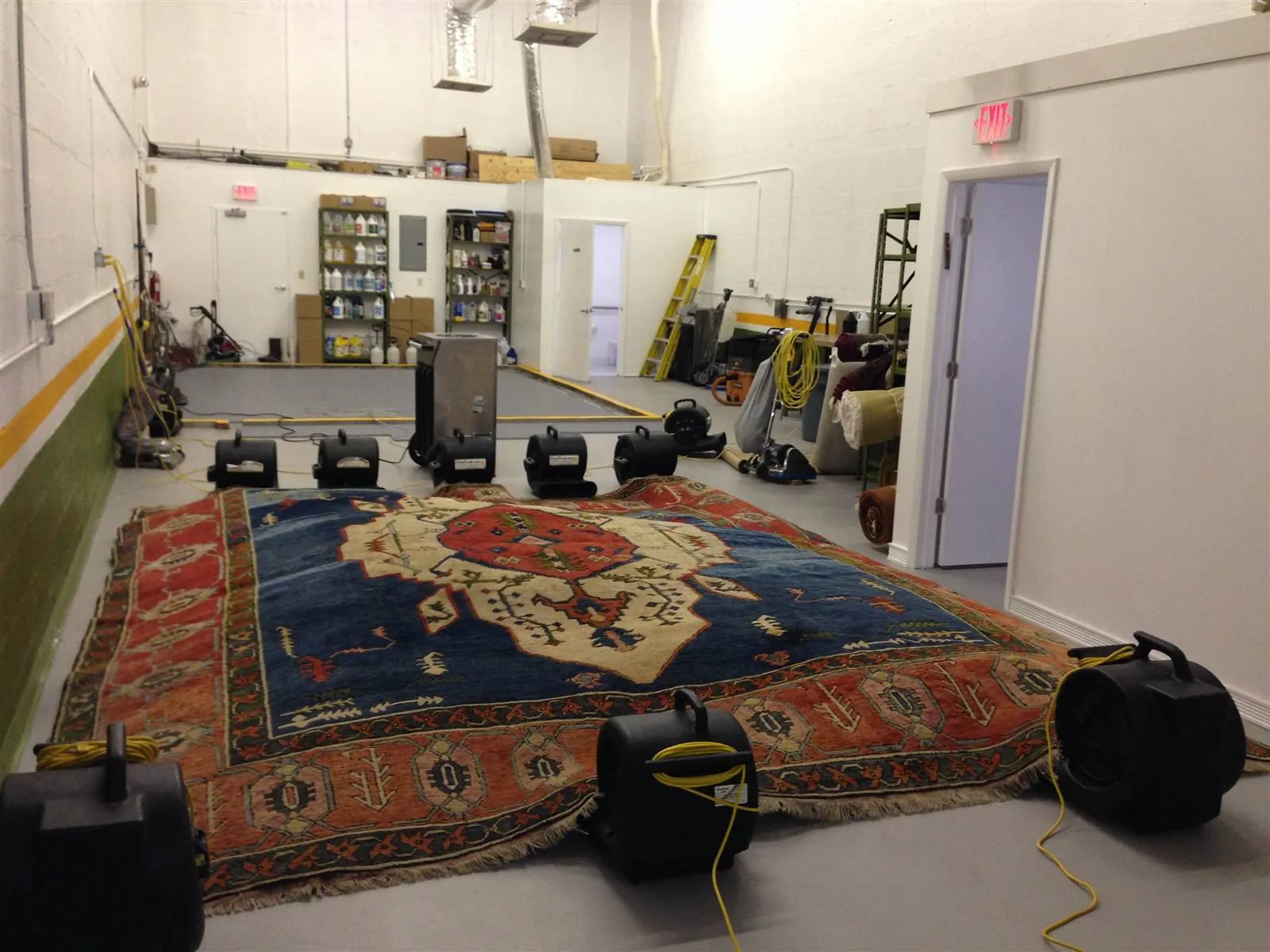
Speed and control. A soaked wool rug left to air-dry in Wellington’s summer humidity can stay wet for days, and a slow, uneven dry is exactly when dyes migrate and browning creeps in from the fringe.
So the rug goes into a temperature and humidity controlled drying room and comes down to dry quickly and evenly. Fast, managed drying is what locks the colors where the weaver put them.
The finish
We groom it. Once the rug is dry, the pile is brushed back into direction, the fringe is combed straight, and any repair work booked at inspection is completed and checked.
Then a final walk-over: front and back, corner to corner. When it passes, we wrap it, load it, and deliver it back to your home anywhere in Palm Beach County — free, on a time that suits you.
Honesty first
Sometimes the honest answer is don’t. A newer synthetic rug that’s only lightly soiled can often be freshened at home for far less than a plant wash costs — and we’ll tell you that instead of taking the job.
The same goes the other way: if a fragile antique would lose more than it gains from a wash, we say so before you spend. Our aim is a rug that lasts, not a bigger invoice today.
Free pre-inspection, zero pressure
Tell us a little about it and we’ll arrange a free pickup, inspect it, and give you the exact price before any work begins.
A minute inside the operation.